Space, flow, and handling optimization in modern liquidation centers
When discussing large-scale product storage, the conversation usually focuses on square footage, shelving, or inventory systems. However, behind every efficient warehouse there is something deeper and less visible: physical principles applied to space, movement, and load handling.
From large logistics centers to liquidation warehouses, physics plays a decisive role in operating costs, inventory safety, and the speed at which products move from receiving to final sale.
For companies that handle high volumes of palletized goods, returns, and mixed loads, understanding and applying these principles is not an academic curiosity, but a direct competitive advantage that translates into better pricing for buyers.
Space is not infinite: the physics of volumetric optimization
One of the first challenges of large-scale storage is that three-dimensional space is rarely used optimally. From a physical standpoint, a warehouse is a system in which available volume must be maximized without compromising stability or access.
Volumetric optimization is based on principles of spatial geometry and load distribution. Studies by the Council of Supply Chain Management Professionals (CSCMP) indicate that poor distribution can waste between 20% and 30% of a warehouse’s usable space.
The use of standardized pallets responds precisely to this physical need. By working with repeatable dimensions, system entropy is reduced, making organization, stacking, and maximum load calculations easier. This allows operators to anticipate how much merchandise can be stored without exceeding the structural limits of floors or racking systems.
Center of mass and stability: why not everything can be stacked the same way
One of the fundamental concepts of classical physics is the center of mass. In storage operations, this principle determines whether a load is stable or prone to collapse.
When products are stacked without considering weight distribution, the center of mass shifts, increasing torque and the risk of tipping. According to the Occupational Safety and Health Administration (OSHA), load collapses are one of the leading causes of accidents in warehouses.
For this reason, pallets are built by placing heavier items at the base and lighter ones on top. This is not a simple rule of thumb; it directly follows the laws of static equilibrium.
In liquidation operations, where many products do not come in uniform boxes, proper weight distribution is essential to preserve inventory during storage and transportation. A poorly balanced pallet is not only dangerous, but also increases the likelihood of damage and financial losses.
The correct physical handling of inventory is one of the reasons why Go Liquidator pallets arrive ready for redistribution or resale.
Product flow: dynamics and reduction of operational friction
The movement of products within a warehouse can be analyzed as a dynamic system. Every transfer, lift, or turn involves mechanical work, energy consumption, and time.
From a physics perspective, one of the main objectives is to reduce friction. In logistics, friction is not only literal (surface contact), but also operational: long travel paths, unnecessary crossings, and repetitive handling.
Research from the Material Handling Industry (MHI) shows that up to 60% of operational time in a warehouse is dedicated to internal product movement. For this reason, modern layouts are designed to minimize travel distances and take advantage of linear flows.
In liquidation centers, where inventory is constantly moving in and out, flow must be continuous and predictable. The physics of motion makes it possible to design routes where human and mechanical energy are used efficiently, reducing fatigue, errors, and costs.
An optimized flow allows Go Liquidator to process large volumes of merchandise quickly, resulting in constant turnover and better opportunities for buyers.
Work, energy, and ergonomics in load handling
Every time an operator lifts, pushes, or moves a pallet, physical work is being performed. According to the classical definition, work is the product of the applied force and the distance traveled.
From both a physical and ergonomic standpoint, reducing the required force is key to efficiency and safety. This is why hydraulic pallet jacks, forklifts, and conveyor belts are used, as they redistribute mechanical work and reduce human effort.
The National Institute for Occupational Safety and Health (NIOSH) states that poor load handling significantly increases the risk of musculoskeletal injuries, affecting productivity and labor costs.
In large-scale operations, applying physical principles makes it possible to design processes where energy is conserved and used optimally. Less unnecessary effort means fewer errors, less product damage, and faster operations.
Gravity, vertical transport, and high-bay storage
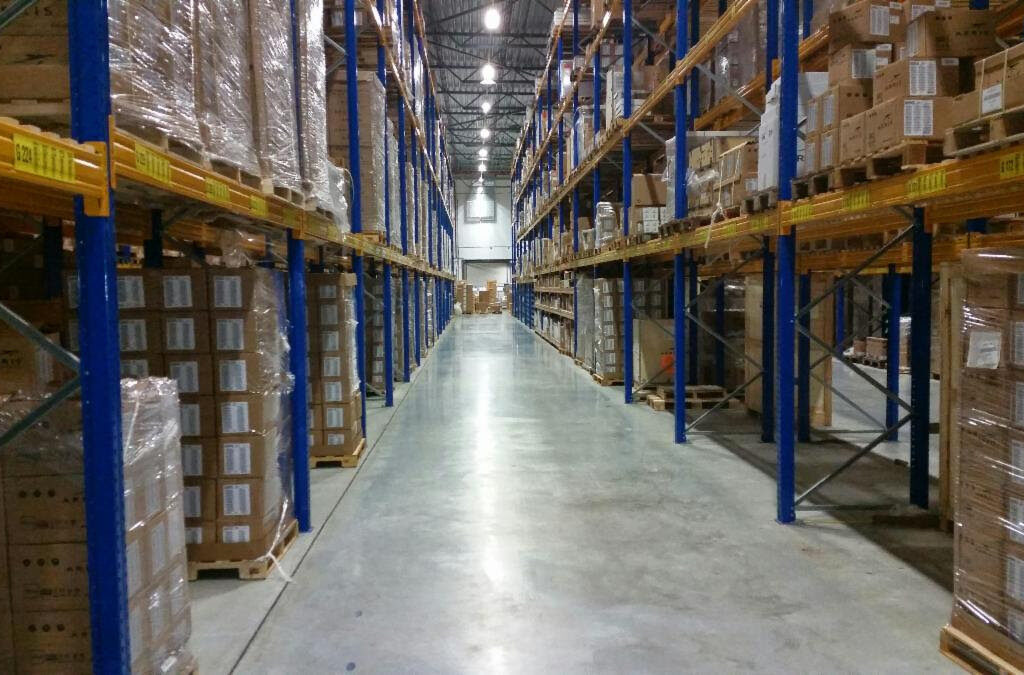
One of the greatest challenges of large-scale storage is making use of vertical space. However, gravity is a constant force that cannot be ignored.
Each additional storage level increases the system’s potential energy, which implies greater risk if not properly controlled. For this reason, industrial racking systems are designed with load limits, safety coefficients, and uniform weight distribution in mind.
According to studies by the Warehouse Education and Research Council (WERC), well-designed vertical storage can increase a warehouse’s capacity by up to 40%, as long as physical principles of load and stability are respected.
In the liquidation context, this type of storage makes it possible to handle large volumes without expanding infrastructure, reducing fixed costs.
Buying from suppliers that optimize their vertical storage, like Go Liquidator, means accessing efficient inventory without added structural costs.
Applied physics in damage and loss reductio
Product damage is not always the result of human error. Many times, it is caused by vibrations, impacts, and poorly controlled accelerations during storage and transport.
The physics of motion explains how sudden changes in velocity generate additional forces on products. For this reason, well-compacted and stabilized pallets reduce the transmission of kinetic energy to more fragile items.
According to the International Safe Transit Association (ISTA), proper load configuration can reduce transportation-related damage by up to 50%.
In the liquidation industry, where every recoverable product matters, this principle is essential for maintaining the commercial value of inventory.
Handling based on physical principles allows more products to reach the final buyer in sellable condition.
Why all of this matters for resellers
The physics of storage may seem like a distant topic for resellers, but it is not. Every principle applied correctly is reflected in lower costs, less damage, higher turnover, and better pricing.
When you buy pallets from Go Liquidator, you are not just acquiring merchandise; you are leveraging a logistics system where physics works in favor of efficiency.
This translates into better-preserved inventory, faster processes, and real profit opportunities for those who know how to move product at the right time.
If you’re looking for inventory backed by efficient processes and ready to scale your business, contact Go Liquidator today.
Conclusion: physics as the silent ally of commerce
Large-scale storage is not just a matter of space, but of applied science. Physics governs how products are stacked, how they move, how they are protected, and how resources are optimized.
Understanding these principles makes it easier to see why certain suppliers can offer better prices without sacrificing quality. In the world of liquidation, where every inch, every movement, and every second counts, physics becomes a strategic ally.
Buy smart, rely on efficient processes, and grow with Go Liquidator.
Sources: Council of Supply Chain Management Professionals | Occupational Safety and Health Administration | Material Handling Industry | National Institute for Occupational Safety and Health | Warehouse Education and Research Council | International Safe Transit Association | Physics for Scientists and Engineers (9th ed.)
Frequently Asked Questions
How does warehouse organization improve large-scale inventory management?
A well-organized warehouse streamlines inventory handling, improves product accessibility, minimizes damage, and accelerates order fulfillment. Effective storage systems also help businesses manage high volumes of liquidation inventory while maintaining operational efficiency.
How can optimized warehouse storage increase profitability?
Optimizing warehouse storage reduces storage costs, improves inventory turnover, enhances space utilization, and supports faster distribution. These efficiencies help liquidation businesses lower operating expenses, protect product value, and maximize long-term profitability.
