In recent weeks, international financial markets have experienced high levels of volatility and nervousness amid the possibility of a new round of tariffs between major economic blocs. This time, the trigger was not a traditional trade dispute, but a geopolitical conflict centered on Greenland, an autonomous territory within the Kingdom of Denmark with strategic importance in the Arctic.
Market reaction was swift and significant:
- Global stock markets fell sharply amid the possibility of tariffs on European products.
- Safe-haven assets such as gold and silver reached record levels.
- Investors adjusted their positions due to growing fears of an expanded trade war.
Although in some cases these measures were never implemented, the mere announcement was enough to generate volatility, alter expectations, and raise red flags for companies operating on a global scale.
Why Greenland ended up influencing the markets
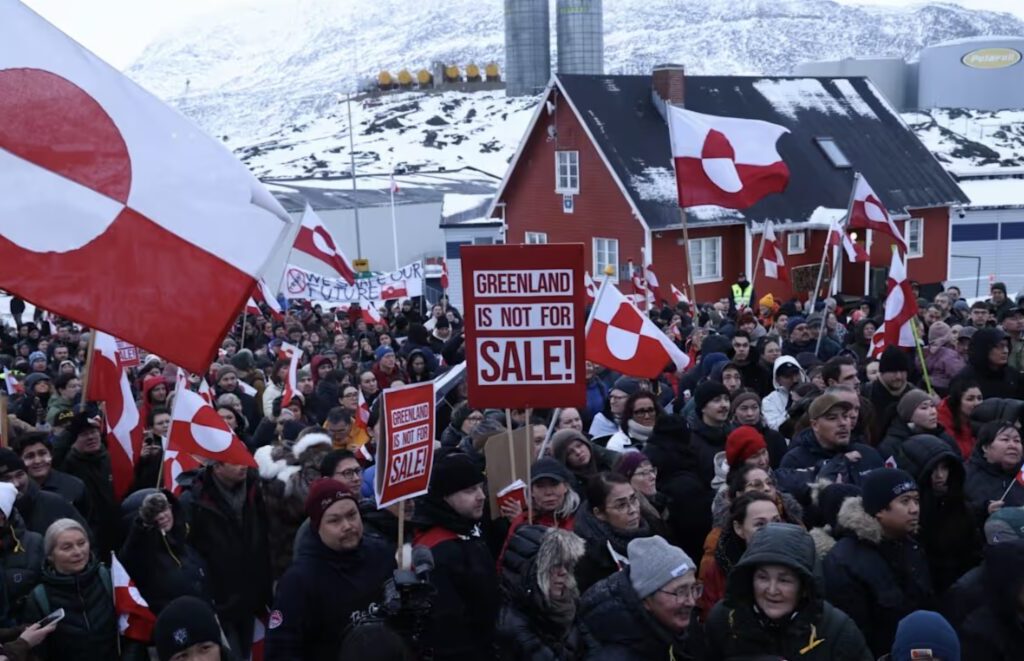
Although Greenland is not a direct trade player — its export flows are limited on a global scale — it has gained prominence as a central piece in a dispute between the United States and European countries:
- U.S. geopolitical interest: The U.S. administration reiterated its intention to acquire or secure a greater strategic presence in Greenland due to its Arctic location and the region’s potential natural and military resources. This sparked tensions with Denmark and its European allies, who rejected the idea.
- Tariff threats: The U.S. president announced that he would impose 10% tariffs on imports from several European countries, potentially increasing them to 25% if no agreement was reached regarding Greenland.
This included countries such as France, Germany, the United Kingdom, and other key partners.
- European political response:
European Union leaders described the tariff threats as coercive and responded by halting the ratification of a trade agreement with the United States.
How markets reacted
Uncertainty over possible additional trade barriers triggered clear responses in the markets:
- Global stock indices retreated, with declines in the U.S. and Europe amid tariff threats.
- Wall Street stocks and other markets suffered significant losses in recent sessions.
- Assets considered safe havens — such as gold — rose in price as risk aversion increased.
However, following negotiations and subsequent statements, a temporary relief rally occurred:
- The president announced that the planned tariffs would not be imposed if a framework of understanding on Greenland was reached with NATO, leading to a significant recovery in stock markets.
- The S&P 500 and other markets closed higher after tariff threats against Europe were withdrawn.
These fluctuations reflect how perceptions of geopolitical and trade risk can move markets even when concrete measures are not immediately implemented.
Implications for international trade and business owners
Although the dispute over Greenland does not stem from a traditional conflict over the exchange of goods, its indirect impact on global trade is real:
1. Perception of trade risk
The possibility of unexpected tariffs can lead to:
- Companies bringing forward purchases
- Adjustments in supply chains
- Reviews of pricing strategies
2. Volatility in financial markets
Sharp capital movements affect:
- Borrowing costs
- Exchange rates
- Investment decisions
3. Trade relations between allies
Tariff threats between traditionally allied countries can:
- Create friction in ongoing agreements
- Trigger retaliatory tariffs
- Generate uncertainty in negotiations such as free trade agreements
The link between geopolitical conflicts and wholesale liquidations
Historically, periods of tariff tension create favorable conditions for the liquidation market for several reasons:
- Preventive overstocking: Companies import more than necessary “in case tariffs rise,” and later need to offload excess inventory.
- Loss of competitiveness in certain markets: Products that become uncompetitive due to tariffs often end up being liquidated.
- Rapid shifts in commercial strategy: Changes in suppliers or markets force companies to dispose of inventory that no longer aligns with the new strategy.
- Pressure on cash flow: In volatile environments, many companies prioritize liquidity over margins.
For buyers and operators in the secondary market, this usually translates into greater supply and better pricing opportunities.
In summary
The episode surrounding Greenland demonstrates that trade risks do not always arise from purely economic disagreements, but can be deeply tied to geopolitical conflicts and strategic decisions. International trade is increasingly influenced by political decisions and short-term headlines. Even when some threats are quickly defused, the impact — or adjustment — is often already reflected in prices, inventories, and trade flows.
For the wholesale liquidation ecosystem, these episodes often act as catalysts: more available merchandise, greater urgency to sell, and more opportunities for those who know how to read the context. The key is to interpret these events as signals of both risk and opportunity, not as isolated incidents.
Staying informed about these geopolitical shifts and their potential commercial repercussions is essential for planning inventory, pricing, and logistics strategies in an increasingly interconnected and unpredictable global environment.
At Go Liquidator, we closely monitor these dynamics to help our clients turn uncertainty into informed decisions within the global market.
Sources: Reuters | The Guardian | Cadena SER
