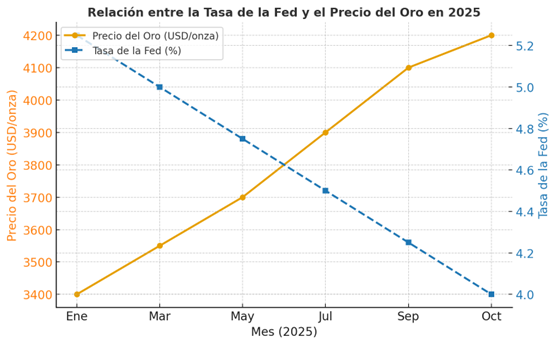
Gold prices broke records in October 2025 — the ounce surpassed US $4,300 (around US $4,356 on October 20) before a slight correction. However, beyond the financial headlines, this movement reflects something much deeper: a shift in the global dynamics of consumption, investment, and trade that directly affects those who buy, sell, or import goods.
Although there’s been a slight correction in November, just as the Federal Reserve (“Fed”) rate cuts influence the dollar and import costs, gold’s rise signals a broader monetary adjustment and a new economic cycle impacting B2B commerce and the liquidation industry. In times when money seeks refuge in solid assets, opportunities arise for those who know how to adapt and take advantage of the moment.
1. What Does Gold Have to Do with Wholesale Trade?
Though it might seem distant from the world of pallets and containers, the rise in gold prices is directly linked to U.S. monetary policy and market confidence.
When the Fed lowers interest rates, the dollar potentially weakens and gold tends to rise. This has a relevant, though not automatic, effect on international trade:
- Importing from the U.S. becomes more accessible. A weaker dollar can reduce the cost of buying merchandise from Miami to Latin America — though note: this also depends on logistics, tariffs, and other factors.
- Higher demand for tangible goods. In uncertain times, consumers prefer to invest in physical products.
- Expansion of liquidation flows. Large retail chains release inventory to maintain liquidity, generating more pallets and lots available for resellers.
In short, when gold rises and the dollar loses ground, wholesale trade opportunities can also increase — but the link is not as mechanical as it’s sometimes portrayed.
2. Opportunities for Entrepreneurs: Gold in Pallets, Not Just in Bullion
In a volatile environment, retailers and importers can benefit in several ways:
- More liquidation inventory: U.S. companies take advantage of high turnover to clear excess stock, returns, or seasonal merchandise.
- Aggressive discounts: Buyers who act quickly can acquire products with much higher-than-usual margins.
- Greater consumer interest in premium products: The perception of gold as a “safe haven” translates into a trend toward high-quality, durable, or affordable luxury items.
- Expansion into new niches: Accessories, cosmetics, or refurbished appliances show strong demand in the Latin American market.
The message is clear: those who adapt quickly to macroeconomic changes can turn uncertainty into competitive advantage.
3. Latin America: Benefiting from a Weaker Dollar
Gold’s strength usually comes hand in hand with a weaker dollar (or at least expectations of weakness), which is good news for importers in the region:
- Lower purchasing costs for those importing from Miami — as long as exchange rates and logistics expenses stay favorable.
- Easier access to credit in some countries, if monetary policies allow.
- Higher resale margins locally, especially when purchase and shipping timing are managed effectively.
In many Latin American countries, this combination is already visible; however, it’s crucial to monitor factors like freight costs, tariffs, or port delays to prevent the exchange-rate advantage from being offset.
In Summary
The rise of gold in 2025 not only marks a historic record; it also reflects a deeper shift in global trade. In this environment, entrepreneurs who understand the connection between monetary policy, the dollar, and merchandise flows hold a unique advantage.
Take advantage of this “Golden Effect” and turn economic volatility into the opportunity your business needs.
Visit en.goliquidator.com and find your next winning pallet.
Sources: Bloomberg Línea | CriptoTendencia | LiteFinance | Metals Focus & World Gold Council | Bullion Rates
Main photo: Jingming Pan on Unsplash
